Molly Toomey, LCSW
Two Torches Therapy
Connecticut, Vermont, Idaho
Two Torches Therapy
therapy for alternative folks
I'm a Licensed Clinical Social Worker offering online psychotherapy for adults in Connecticut, Vermont, and Idaho, and non-clinical services worldwide.I provide affirming, trauma-informed support for people who don't fit neatly into society's norms of gender, sexuality, relationships, and personal practices. I'll help you gain insight on your past and present, move through lingering traumas, break free of patterns that don't serve you, enjoy better relationships and greater self-worth, and step into the life you want.
neurodivergence | LGBTQIA+ | alt lifestyle practices
Support for night owls & early risers: sessions from 5:00 AM-1:00 PM EDT
what brings you here
seeking affirming, trauma-informed support
as unconventional as you are.
Are you navigating big feelings, big questions, or big life transitions? Struggling to make sense of who you are or what you want, or to move forward from a painful past?Maybe you're weighed down by the anxiety, the overwhelm, the disconnection and isolation. Yearning to feel safe, secure, accepted, and loved by others (and yourself). Maybe you're ready to "do the work", to get un-stuck and move toward feeling better, but whatever you've tried hasn't helped—or you don't even know where to begin.On top of it all, you're done with feeling unseen, misunderstood, or judged by therapists for your outside-the-box identities or unconventional lifestyle—whether it's your alt gender expression, your special interests, your BDSM dynamic, or your woo practices.You need a fresh approach, a safer space, and some good company for the journey.
welcome
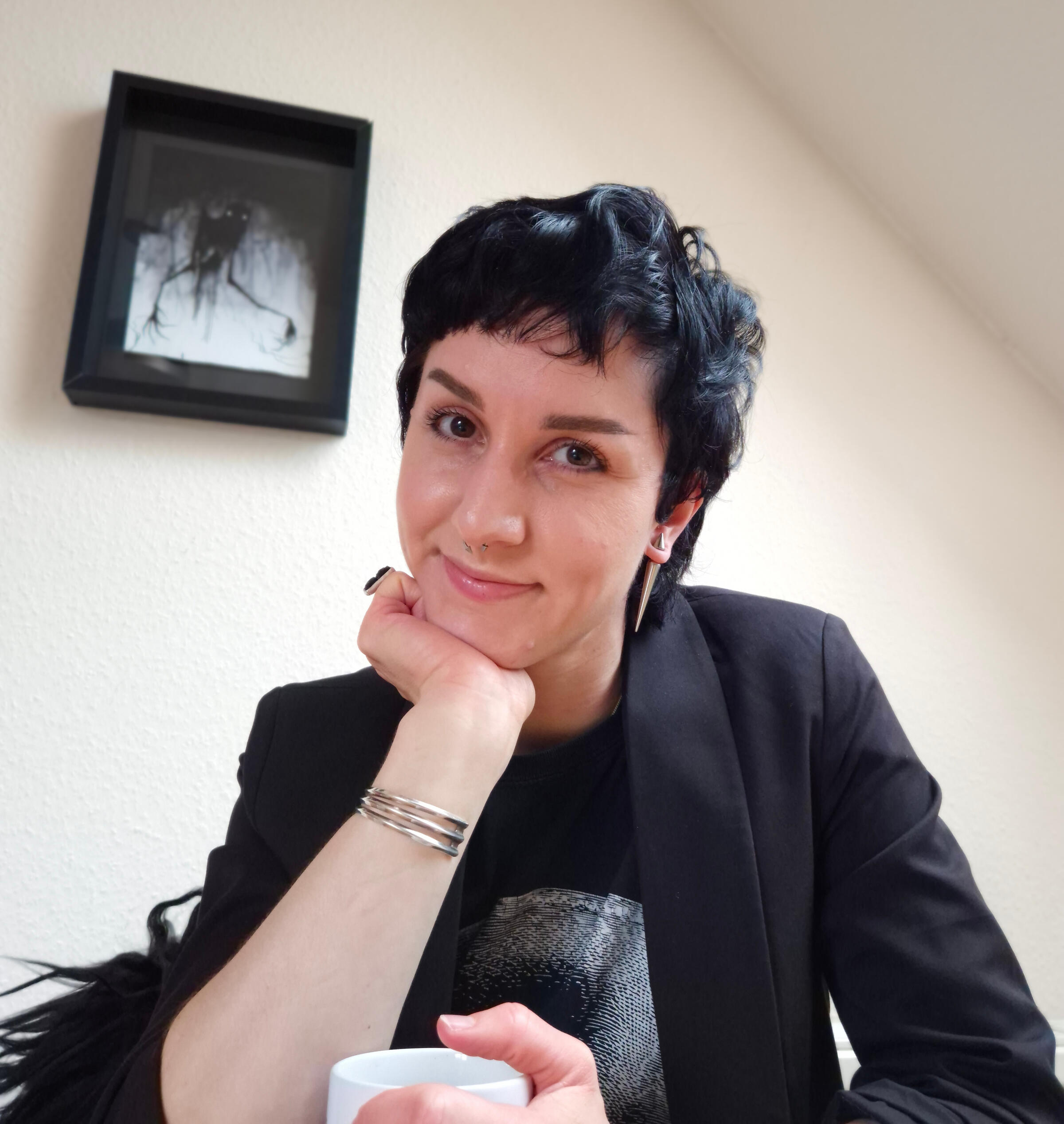
hi there, I'm Molly
I'm a Licensed Clinical Social Worker offering trauma-informed therapy and non-clinical coaching for folks who live life outside the box—with specialized support for gender, sexual and relationship diversity, alternative communities, and cultural "outsiders".As a queer, neurodivergent person, an immigrant, and someone who's found their place in various "alternative" communities and subcultures, I walk that non-traditional path myself. I know personally how transformative it is to be deeply understood and connected, and what a relief it is to not have to justify or explain yourself to your provider.I've accompanied hundreds of people on their journey toward feeling happier, safer, more connected and whole. I'd love to walk that path with you as well.

outcomes
what therapy can offer you
Over the years, I've had the honor of helping hundreds of people to stabilize, connect, and get out of survival mode and into their lives. Thanks to our work together, clients have expressed feeling:
More clarity on their problems and possible solutions
Deeply understood and cared for
Greater self-acceptance, pride in their identities
More confident and secure in their lives and relationships
More able to voice their wants and needs
More stable and safer with themselves
Able to handle deep sadness, stress, and anxiety in healthier ways
More able to ask for help and to receive care
Calmer, happier, "better"
I'd love to help you too! Book a free, confidential 30-minute consult call and let's see how I can help you on your own journey.
how I work
a different approach
I'm not your old-school talk therapist.My approach is based on relational and psychodynamic therapy. It requires vulnerability, authenticity, collaboration, and really showing up—both counselor and client!This approach is all about healing through connection. It starts with building a genuine, trusting alliance with me where you feel safe enough to dig into the tough stuff at your own pace. We'll explore past and present relationships and build a blueprint for safety and more fulfilling relationships with others and with yourself—starting in the here-and-now, in the therapy room.I am affirming of your diverse identities and life experiences, from gender and sexuality to neurodiversity to culture.I'm also trauma-informed. I prioritize creating a safe and collaborative environment in session, with transparency and respect for your boundaries. We move at your pace.I think and work systemically. Your wellbeing is not just thoughts and feelings inside a body! It's affected by the systems we move through, the laws governing us, our physical wellness, society, culture, finances, oppressions. I'm not afraid to bring the "big picture" into the therapy room.Your unique identities are strengths, not deficits! We'll explore the strengths and wisdom you already have, figure out the gaps, and expand your mental health toolbox.


what I offer
services
I offer individual psychotherapy for adults in Connecticut, Vermont, and Idaho.I also offer non-clinical services for folks internationally:
◆ Therapist/educator trainings
◆ Support groups & workshops
◆ Coaching (open to folks across the U.S. & worldwide; limited spots available)*Therapy or coaching? Click here to learn the difference & explore which service is more appropriate for your needs.
support tailored to you
specializations
neurodivergenceautistic, ADHD, AuDHD, bipolar, & more

navigating daily life & relationships in a neurotypical worldchronic stress/trauma related to masking, self-erasuresensory processing & social issuestrouble coping in environments that don't adapt to youtrying to integrate a new diagnosis or self-diagnosisseeking community & belongingparenting a neurodivergent child
gender, sexual & relationship diversityLGBTQIA+ & beyond

navigating gender & sexual identities & practices outside the mainstreamcoming out (or not)struggles with self-acceptance, internalized homophobia/transphobiacoping with the current social/political climate, fear & overwhelmnavigating relationships & familyexploring alternative relationship structures & practicesparenting an LGBTQ+ child
relational traumabreaking cycles &
healing invisible wounds

lingering pain from a difficult childhood, abuse or neglect from caregiverstrouble with intimacy, relationships, boundariesfeeling fragmented, distrusting, or alienated from yourself or othersstuck in the same old cycleslow self-worth, struggling to value or love yourselffeeling constantly on-guardpersistent fear & shame
You might find yourself reflected in one of my specialties—but you might not, or maybe you're not sure. And that's okay! These are just a few big topics I work with, and it doesn't capture how complex and individual each person's experiences are.The most important things are:
Do we connect?
And am I the right resource for your needs and goals right now?The best way to find out is to reach out.
FAQ
frequently asked questions
I'll answer all your questions about my qualifications, services, insurance, fees, policies, and how to get started.


booking
book a free intro call
I offer a free introductory call to help determine if we're a good fit.We'll have 30 minutes to chat confidentially about what brought you here and how I can best help you, and I'll answer any questions you have.Book your call easily:
Message me through my website
Contact me through my Psychology Today profile
Call me at (959) 500-6014
A final note from me, as someone who's also been through it:Therapy isn't all heavy feelings or actively processing difficult moments past and present. It's also sharing silly moments, laughter, joy, being your most authentic self with another human. And it's the thrill of realizing it really does get better.
hope to see you soon.
Contact
send me a message
Note: I do not monitor my email consistently and am not a crisis support resource!
If you're having an emergency and need help now, please contact your local emergency service or national crisis hotline. Take care.

welcome
welcome to my practice!
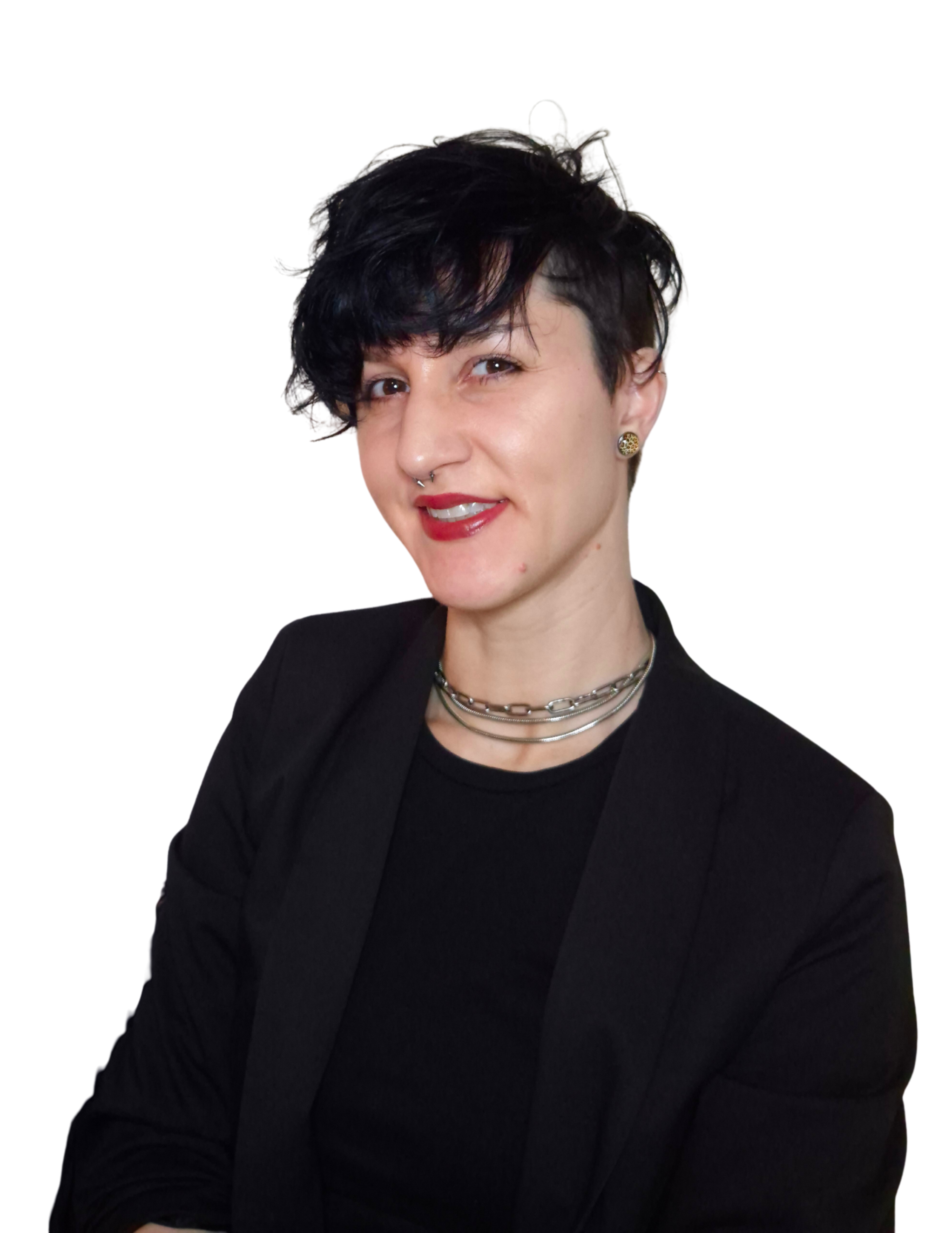
Hi! I'm Molly (they/them), Licensed Clinical Social Worker in Connecticut, Vermont, and Idaho, and the human behind Two Torches Therapy.I've been in the business of helping people since 2010. I've worked with people of all ages from wildly diverse backgrounds in different cities, countries, and languages. My approach draws from relational and psychodynamic therapy and a systemic, intersectional lens: I believe that our relationships, our place in society, and the systems we're a part of shape how we live and love, and that deep, genuine, attuned connection helps us heal from relational wounds and live our most authentic, fulfilling lives. (More on this here.)I've personally experienced the transformative power of therapeutic connection, both as a therapist and as a client, and I am deeply grateful to each client who's decided to share their world with me over the years. I hope you'll consider doing the same!Please scroll down to read about my story, my mission and values, and what Two Torches means to me.
my practice
why Two Torches?
The imagery of two torches has guided me through many long days and nights, both as a therapist and as a human moving through an often cruel and traumatizing world.One torch, borne by one person, can provide a light in the darkness; if it is extinguished, or if the torch-bearer cannot find their way out of the darkness, the light burns out and the torch-bearer is plunged back into darkness.Two torches is a collaborative journey. It allows the light to reach further into the darkness. One torch can re-light the other if one goes out, or carry both torches while the other torch-bearer rests from the journey. It means company in the darkness.◆ ◆ ◆Torches are used for light in the darkness, for ceremony and celebration and somber ritual. You'll see versions of torches carried at protests, bonfires at parties, candles atop birthday cakes—torches, fire, and flame appear all across the range of human experience and emotion. Torches can also burn everything down, creating space for something new.◆ ◆ ◆Two torches appear in mythology as well. The ancient Greek goddess Hecate is depicted holding two torches. Hecate was the goddess of magic, of borders and transitions, doorways and crossroads, and of what lies outside or beyond our mortal realm of understanding. A protector and guardian, Hecate was also a keeper of keys, able to lock and unlock the gates of the mortal and shadow realms.Hecate was also a guide into and out of darkness: she and her two torches accompanied Persephone on her annual journey to and from the underworld.To me, two torches represents not just your journey, or my journey, but our journey together through the sometimes very dark, very painful process of therapeutic recovery and healing. It represents bumbling through uncertainty and chaos; making mistakes, having ruptures, and losing sight of the path; facing the shadows of the past; delving into the dark depths of our emotions and returning intact. It represents the many faces and facets of our identities, our complex emotions and experiences, our relationships with others and with ourselves.In this way, two torches represents the power of relational therapy: When you doubt your ability to face heavy feelings, sharp questions, and painful experiences, when you need a rest during the journey, or when you need your torch re-lit—I will be there.
how I got here
my story
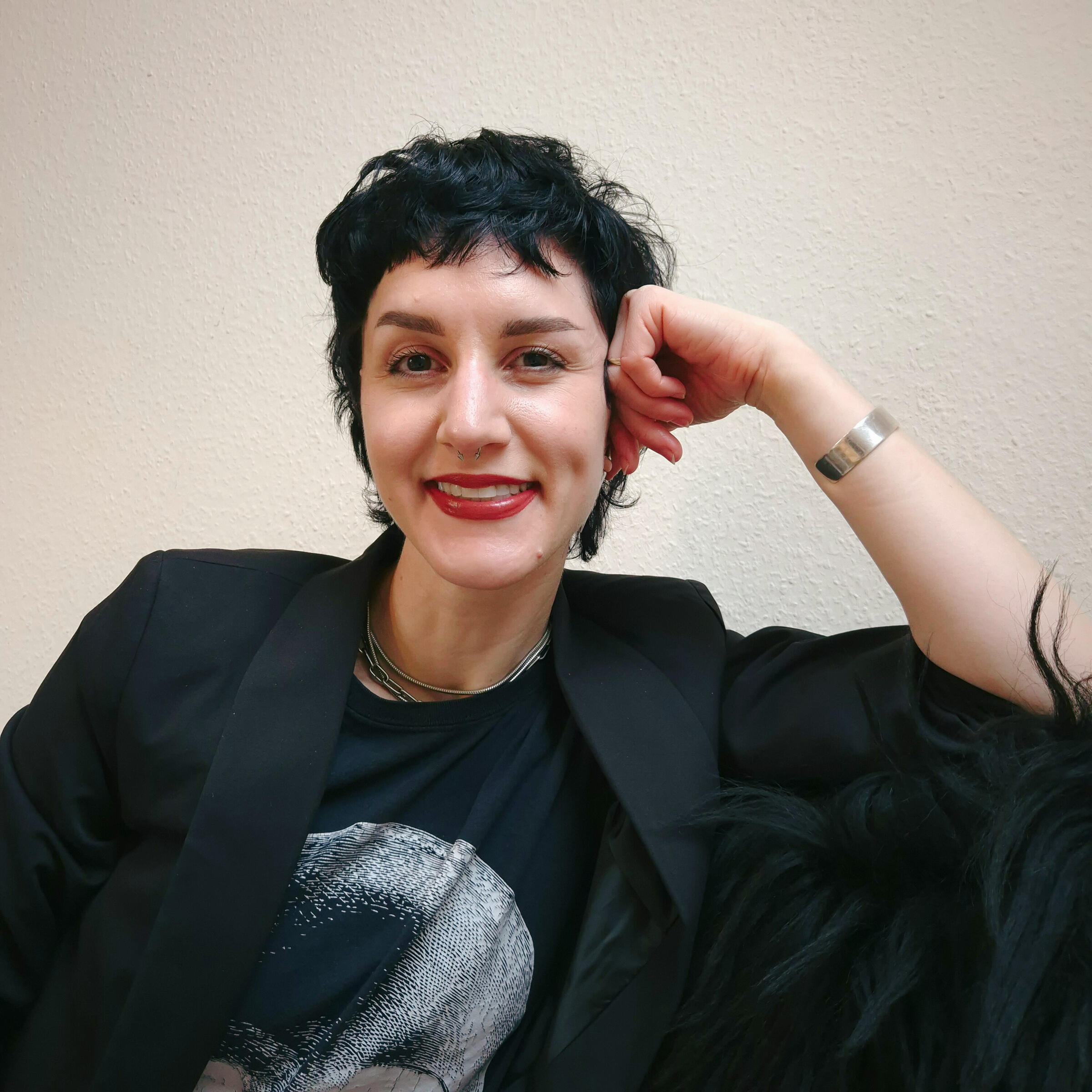
My drive to work in mental health blossomed out of need. I grew up in the U.S. in a low-income family, a queer, gender-confused kid with undiagnosed neurodivergence and an inclination toward alternative lifestyle practices. I quickly realized that the world was not built for people like me, but I was driven to try to change that.After college, I worked in the world of sex education, counseling, and youth services until shifting to mental health work. I pursued a master's degree in clinical social work at Smith College School for Social Work, where I studied psychodynamic psychotherapy with a social justice lens and completed nearly 2,000 hours of supervised clinical experience. I then dedicated myself to serving low-income, immigrant, and LGBTQ+ folks in my communities as an outpatient therapist and jack-of-all-trades social worker.Community mental health demands that you face the realities of injustice affecting the most vulnerable in society, and that you play every helping role: therapist, social worker, care coordinator, mediator, community organizer, fierce advocate and ally. Making mental health support more accessible, relatable, and human became part of my fight for social justice.I eventually moved out to a different country and was thrown into a whole new world of challenges as an immigrant and queer neurodivergent person. I felt driven to provide the care I so struggled to find myself, to provide a therapeutic home base for the communities I most connected with.I decided to open Two Torches Therapy. I now welcome all Connecticut, Vermont, and Idaho residents seeking an affirming space—and another torch to help guide the way through the darkness.
commitments
my mission & values
My mission is to provide affirming, accessible, trauma-informed mental health support to those who live or love alternatively—to the communities who are too often misunderstood, unseen, or underserved by traditional mental health professionals.My background is in community mental health—bringing psychological and social support to the people who need it the most, but struggle the most to access it. I have spent years focused on making comprehensive mental health services more accessible and relatable for people who would otherwise not be able to access care or who had had negative experiences with helping systems. I came from those communities and I remain dedicated to them.I aim to disrupt the usual therapist/client dynamics. I work holistically and relationally, not authoritatively. I prioritize human dignity, autonomy, and connection.I am driven to provide support that is queer- and trans-affirming, neuro-affirming, kink-affirming, and sex-positive. To me, being affirming is an active process. It's recognizing and respecting my clients' identities and autonomy. It's actively working to create an inviting, supportive space for them to be their full selves without judgment while gently dismantling internalized shame and stigma. It also means acknowledging systemic injustices, pathologizing, and erasure, and using my platform to advocate.Beyond just affirming care, I am committed to competent care. I have worked in many capacities with folks of diverse identities, people facing difficult life situations and systemic barriers and injustice, and I completed a clinical social work program dedicated to exactly this. I regularly pursue training and education to ensure my approach is informed, ethical, and up-to-date. Click here for an overview of my education, training, and experience, from mental health to social justice.I prioritize meeting people where they're at and valuing them as equals. I respect you and see you as the expert on your own life. I'll challenge you, while respecting your boundaries and the pace you move at. It is essential to me to work collaboratively—alongside you, not above you.While I've gained so much from my formal education and professional training, I also deeply value lived experience as a source of wisdom—yours as well as mine.
lived experience
a personal connection to my work
I'm an outsider myself. I'm an immigrant, queer, they/them, neurodivergent, and am no stranger to alternative lifestyles and relationships. I understand what it's like to be the odd one out, to feel the pressure of expectations from society, culture, family, religion, to hit up against professional and educational and political and legal barriers to being you.Personally and professionally, I also know how difficult it is to find mental health providers who are both comfortable and competent in working with folks outside the mainstream, and the awkwardness and frustration of having to explain your "unusual" identities or practices to your therapist—especially in a different country or a foreign language. I get how hard it can be to connect and (let yourself) be seen.I also know how liberating and joyous it is to feel seen, accepted, respected, and supported. If you're ready to start your own journey toward greater connection and wholeness, I'd be honored to join you.

now let's get personal
a little more about me
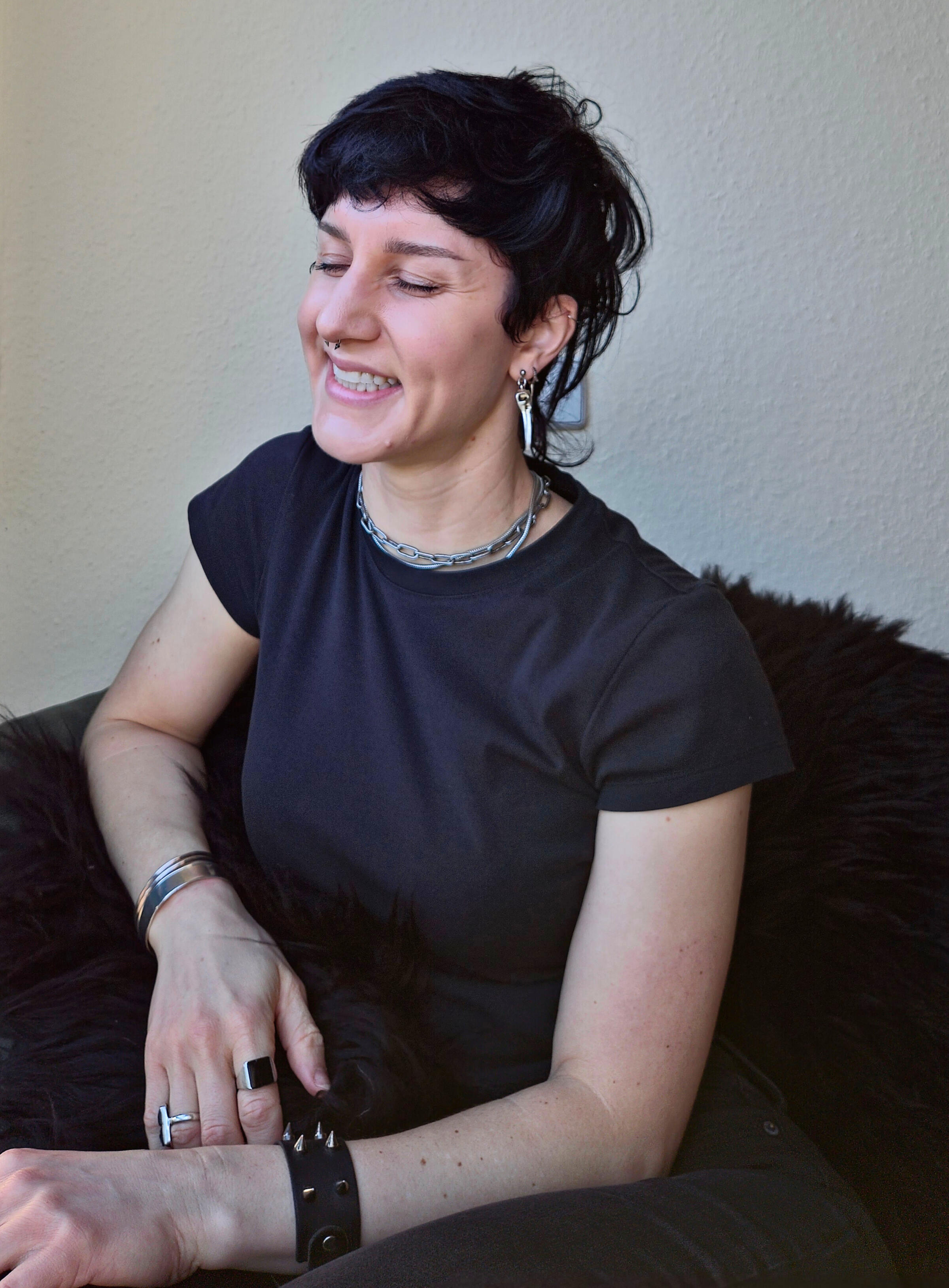
My top hobby is specialty coffee. Give me a gooseneck temp kettle and the funkiest beans you got and let's caffeinate.I love goth music and subculture—and spooky artwork. Show me your favorite dark art!I got into tarot reading and alternative personal practices as a child, and doing daily readings has become an important ritual for self-care and self-reflection. I'm a little witchy and I embrace clients who are a little woo, too.I travel as much and as cheaply as possible. I love train travel.I enjoy DIY and am learning to make chainmaille jewelry.My wardrobe is 99% black and 1% leopard print or Barbie. (You've been warned!)
healing through connection
a relational approach
What's hurt in relationship, heals in relationship.Humans are wired for connection. Connecting, being in relationship with others, allows us to get the support we need, to co-regulate, to move through difficult emotions and isolation and distress and toward healing. And by "relationships," I mean all sorts! Our relationships with our caregivers in childhood; relationships with family, friends, partners; our relationship with ourselves, how we see ourselves, talk to ourselves, treat ourselves.When we build deep emotional bonds with our caregivers as children, we develop mental blueprints for how the world works that we carry into adulthood—blueprints that tell us what relationships can or should look like, what is reasonable to expect from others, how to interpret others' behaviors, how to get our needs met and protect ourselves from pain or abandonment, and so on.People who were neglected, abused, not attuned to, or chronically let down by their caregivers or important figures in their lives can struggle more to feel safe and whole when they're in relationship with others, or to experience relationships that are nourishing for them. They develop relational wounds—"attachment wounds". Some call this complex trauma.People who must struggle to live as their authentic selves due to social norms, family or cultural pressures, or oppressive religious or political systems can also have a difficult time feeling safe and developing trusting relationships with others or with themselves. Many folks have never experienced feeling truly seen and accepted unconditionally.So how does relational work help folks get un-stuck, feel better, connect, and heal?


A relational approach says that healing happens through experiences of safer, healthier, more secure attachment and connection—and the therapeutic relationship is what drives this healing.While we'll be exploring your experiences past and present, relational work isn't about trying to change your life by changing your thoughts and behaviors—it's about creating a space to experience something different.As someone who works relationally, I'm not trying to fix something broken inside you. (P.S. You aren't broken!) I'm focused on building trust over time to create a warm, accepting space where we can explore thoughts, feelings, and patterns and experiment with new ways of relating that better serve you.So what would that look like in practice?In our counseling sessions, we might be:
reflecting on old patterns and painful past experiences where you were abused, neglected, not taken care of, had to "parent" others, or otherwise let down in important relationships
observing what's happening right now in the room, approaching it with curiosity rather than judgment, and exploring where else these dynamics might play out in your life
inviting you to share your genuine feelings on something—perhaps stepping in to share my own authentic reaction—and sitting with that vulnerability together
reexamining a situation through a lens of curiosity and empathy rather than judgment
test-driving a new approach to communicating or resolving conflict in the outside world
staying present to work through a conflict or rupture between us, live in session
There will inevitably be "ruptures" between us (misunderstanding, misattunement, conflict, feeling angry or frustrated or let down)—and that is part of the process. We're both human! And we're doing the work when we show up again and allow for the opportunity for a "repair".I am trained psychodynamically, so I look to the past and to the unconscious for information and insight on the hows and whys. To avoid getting stuck in reflecting and ruminating, I also ground us in the here-and-now and focus on creating new experiences in the present that help your brain re-wire itself for healthy, safer relationships.Finally, relational work means joining you as a collaborator rather than an authority—and this means bringing myself and my personality into the work too. I am not a "blank slate", and I will show up more fully in session than traditional talk therapists or analysts. Laughing, crying, cursing—we're in this together!All feelings are welcome.
get answers
frequently asked questions
Jump to a section:
Qualifications
Counseling/Therapy
Insurance, Fees, Policies
Privacy
How To Get Started
Additional Services

FAQ: qualifications
What qualifies you to do counseling/therapy?
A combination of higher education, professional development, experiential learning, supervision, and years of helping hundreds of people in my communities!What is your training?
I completed a master's degree at Smith College School for Social Work, specializing in clinical social work—a branch of social work that focuses on treats mental health and wellness holistically, addressing not just psychological and emotional challenges, but also bigger-picture barriers and oppressions. Through coursework and nearly 2,000 hours of clinical internships, I learned and practiced trauma-informed psychotherapy, counseling, and crisis intervention with adults and teens, one-on-one and in groups. After graduating, I completed over 3,500 hours of supervised clinical social work in my communities, passed the licensing exams, and eventually gained advanced licensure as a clinical social worker in Massachusetts and later in Connecticut, Vermont, and Idaho.What is your professional experience?
I've been serving my communities in many different ways since 2010. I have nearly a decade of experience in the field of social work and psychotherapy. I have also worked in sexual health counseling and education, community outreach, and social justice work including immigrant rights and reproductive rights. Read all about my work history here, including my MSW degree, licensure, and professional background.What is your licensure?
I am a Licensed Clinical Social Worker with licenses to practice psychotherapy with residents of Connecticut, Vermont, and Idaho. (License numbers: Connecticut license #15933; Vermont telehealth license #089.0137218TELE; Idaho telehealth license #1281822) I previously held a clinical social work license in Massachusetts. I also have foreign accreditation—in Germany, I am a state-accredited social worker. (I do counseling and social work with residents of Germany and am not a licensed psychotherapist there.) My credentials are outlined here.
FAQ: counseling/therapy
Who is online therapy/counseling best for?
Online therapy is a wonderful option for talking through difficult experiences past and present, reflecting, building insight, learning and practicing new skills, and figuring out how to get out of unhelpful patterns and move toward the life you want to be living—with the support of a trained, experienced, licensed professional. It's private and convenient, too—you can get support without even leaving your couch.Who should not do online therapy?
Online therapy is not the ideal service for you if you're in crisis and need help right now, or you need help with immediate safety and stabilization—for example, if you're looking for a 24/7 support resource or are in an acute crisis and need psychiatric help. In those situations, safety is the first priority, and it's often better to meet with someone in-person near you. (If you're in crisis, please seek support immediately from your local crisis services so that you can get help quickly!)I see you also offer coaching for people across the U.S. and worldwide. What is coaching? Should I do therapy or coaching?
Coaching and therapy are distinct services with distinct purposes, goals, and orientations. It is important to understand the difference between the two so you can select the service that's most appropriate for you and your needs/goals! Coaching is ideal for clients who have a stable baseline of wellness and are looking to work on personal, professional, and/or spiritual development; therapy is for folks looking to work on their mental health. You can learn more here on my website, and we can clarify your needs and the best services for you through a free consultation. Coaching is a non-clinical, supportive service, not psychotherapy, and is not intended as a substitute for psychotherapy or therapeutic treatment of diagnosable mental illness by a licensed professional. Click here to read more about coaching vs. therapy and explore which service may be the most appropriate for you.Is our work together confidential and private?
Yes! Counseling with me is confidential, meaning I won't share information about you with someone else (unless you consent to it). There are very few exceptions to this, including serious concern for your safety or someone else's and legal orders related to serious crimes. Our sessions are not recorded. I also keep your personal information private and protected, in compliance with HIPAA law. You'll find more information on privacy and confidentiality below.What ages do you work with?
I work with adults ages 18+. Young adults welcome!Do you do couples/relationship counseling or groups?
I do not do couples/relationship counseling, but I will be offering online groups in spring/summer 2026!What languages do you speak?
I'm a native English speaker, and I also speak advanced German and Spanish. I have done therapeutic and educational work in all of these languages.How do we meet online?
We'll use a free, secure, confidential video-calling platform to meet. I send you the link before the session, you click it, and we're in a private meeting! No apps or sign-ups needed.What if I don't feel up for a video-call?
I want to make counseling as accessible as possible, regardless of personal preference or neurotype. I invite you to consider alternative forms of participation in the sessions. If you need to turn your camera off, or only feel able to participate by audio or messaging on the video-call—or even exchanging secure messages during the session—let me know and we'll explore those options. Let's get creative!Can we meet in person instead?
I'm only available for online therapy for Connecticut and Vermont residents.How long will we meet for?
We will meet for ~55 minutes.How often will we meet?
I generally meet with clients weekly, and we meet longer-term—relational work takes time.When are you available to meet?
I'm generally available weekdays from as early as 5:00 AM until 1:30 PM Eastern Time. (Calling all night-owls and early-risers—this is for you! I can accommodate the schedules of many teachers, health care professionals, shift workers, and students.)Why do you have sessions available at 5 AM and send emails at strange hours?
Because I'm currently located in Germany and working from a different time zone! We'll discuss this on the consult call.
FAQ: insurance, fees, policies
Do you work with insurance?
No, I am private pay only.Are there any benefits to not using insurance for mental health support?
Yes, there are many! More privacy (there's no reporting, so insurance companies won't see your most sensitive information, and you won't have a diagnosis in your health records forever). More flexibility and no permission needed (you don't need to get approval from a company to start taking care of your mental health; no external limits on how long you can be in counseling). And, importantly: no permanent record of an "illness" or private information sent in to insurance companies. This may be especially relevant to LGBTQIA+ folks, immigrants, and other communities seeking support in the current political climate.How much does it cost to do counseling with you? What are your fees?
My standard fee for individual therapy is $175 per session. My coaching fees begin at $175 per session. Read more about my fees here.I can't afford your standard fee. Do you offer a sliding scale/reduced rate?
Whenever possible, I offer reduced-fee therapy as a member therapist of the Open Path Collective. Click here to learn more, or visit my Open Path therapist profile to check whether I am currently accepting new reduced-fee clients. For much of my life, I was uninsured or underinsured, and I am deeply committed to helping others access the care they need, while ensuring that I can also sustain myself.How do I pay for sessions? When?
I accept payment by secure bank transfer. I will send you an invoice with my bank details. If you're unable to pay by bank transfer and must pay by card, I may accept payment through Wise, but Wise may collect a small processing fee.
Payment for each scheduled session must be received before the start of the session.What is your cancellation policy?
Please contact me at least 24 hours before our scheduled session to cancel or reschedule, and your payment will be applied to the next session. If you cancel with less than 24 hours before the session, this is considered a late cancellation, and the fee is the cost of the session.
Note: If there is an emergency or you're truly sick, please contact me before the session starts, and if possible, I will offer to reschedule you for the same week with no cancellation fee. No-shows will be charged in full.I'm feeling sick/bad/tired and don't really want to do a video-call this week. What are my options?
Remember: If you don't feel up for a video-call but don't want to late-cancel or miss out on your session, you have the option of participating in different ways (video-off and audio-only, phone call, messaging...). If you're able to participate in the session in an alternative way, please consider doing that rather than canceling the session. Continuity is important, and I'm happy to get creative to make it work for you.How about refunds?
All of my services are non-refundable. You'll find more info on this in the consent forms I'll send you.
FAQ: privacy
I'm concerned about privacy, especially online. How do you protect my personal information?
Privacy and protection of personal information is very important to me both personally and professionally. As mentioned: no reporting to health insurance companies or third parties. I follow HIPAA data protection laws to ensure that sensitive information is protected, meaning that I use HIPAA-compliant platforms for sharing and storing private health information, and you are made aware of the risks of communicating in other ways. I also try to minimize the use of electronic health record software to manage clients' personal information in order to minimize the risk of security breaches and keep your information out of companies' hands. I keep paper progress notes. I do not use AI for anything counseling-related.What is HIPAA?
The Health Insurance Portability Accountability Act (HIPAA) is a federal law that protects the privacy and security of individuals' private health information. I also comply with the General Data Protection Regulation (GDPR), which is a data protection law for the EU. You'll find more information on all of this in the consent forms.What about video-calls and emails?
The video-conferencing and email platforms I use are encrypted and HIPAA-compliant also, but there is always some risk to sharing sensitive information online.
FAQ: how to get started
How can I start working with you?
It starts with a free introductory call: first you book a 30-minute intro call here, then we meet and see if we're a good fit. We can schedule our first counseling session at the end of that call if you're ready, or you can think about it and follow up with me. If you choose to move forward with me, I'll send you some forms online and the invoice. Then we meet!How do I book this free intro call?
Easily! Click here for all your options—you can message me through the website, email me, or call me. Please tell me 3 dates and times you'd be available to chat and I'll write you back to confirm. You can also reach out to me through my other online profiles (see below).I need help right now though. What do I do?
I am not a crisis provider, but I want you to get help! If you're having an emergency or need help immediately, please call your local mental health crisis team or emergency services (dial 911). Check out this website for alternatives to calling the police. Please stay safe.Where else can I find you online?
Come visit me at my main website, mollytoomey.com, or on Psychology Today, OutCare (directory for LGBTQ-affirming providers), or Inclusive Therapists.
If you're moving abroad or currently live outside the U.S., you can also check out my international counseling website at counselingwithmolly.com or see my profile on It's Complicated. See you on the interwebs!
FAQ: additional services
Besides therapy, do you offer other services?
Yes! You can find an overview of all of my services at mollytoomey.com. Besides supportive services like counseling and workshops, I also offer support for people in the U.S. who are interested in moving to Germany as an immigrant or expat. I went through this experience myself and decided to use my lessons learned to help others! I specialize in mental health professionals (social workers, therapists, counselors) as well as LGBTQIA+ folks looking to leave the U.S. Read more here.I'm interested in something you aren't currently offering. Can I contact you anyway?
Please do! My skills and knowledge extend beyond what I have listed on this website, and I am always interested in new ventures and challenges. If I can't provide what you're looking for or I'm not the best fit, I'll do my best to refer you to someone who is.
fee policies
fees
Individual therapyMy standard fee is $175 per session.I am private pay only (I do not work with insurance). This means you will not be able to be reimbursed for our sessions by your insurance company.There are many benefits to private pay therapy, including the protection of your personal information and much greater flexibility in treatment. Read more here.
As a private pay therapy client, you have the right to a Good Faith Estimate for your services.
If you are uninsured, under-insured, or unable to afford standard rates:
If I have slots available, you may be able to do therapy with me at a heavily reduced fee through the Open Path Collective, where I am a member therapist. Find out more here.
◆ ◆ ◆
ConsultsCollateral consults, such as phone calls with your prescriber, can be helpful for care coordination. Consults are charged a pro-rated fee in 15-minute increments based on the session fee.
◆ ◆ ◆
CoachingCoaching fees are based on a base rate of $175 per 55-minute session, but are adjusted depending on our coaching agreement—length and frequency of coaching sessions and contact between sessions may vary, and fees are adjusted accordingly. Read more here.
reduced-fee therapy
I understand the struggle to afford therapy. I spent most of my life with limited or inconsistent access to mental health care. I work hard to find ways to make my services more accessible while also sustaining myself.Whenever possible, I offer a reduced fee for people who are uninsured or underinsured and unable to afford therapy at market rates. I do this as a member therapist of the Open Path Psychotherapy Collective.
If I have any slots available for reduced-fee therapy, my profile on the Open Path directory will state that I'm accepting new clients.
If I am not currently accepting new reduced-fee clients, my profile will state this as well.
You can view my profile and check my status anytime here: https://openpathcollective.org/therapist/molly-toomey/Each person who pays the standard fee is supporting my ability to take on another reduced-fee client who would not otherwise be able to access care.
◆ ◆ ◆
Update, 8/31/2026:
I am currently at capacity and am not accepting new reduced-fee clients at this time. Please check back soon!
specialization
relational trauma
Are you grappling with relational trauma—lingering trauma that arose from abuse, neglect, or an unstable relationship with caregivers earlier in life?You may have experienced a very difficult past—a childhood wrought with instability, chronically neglectful or abusive caregivers, or unhealthy relationships, or other painful experiences that still haunt you today. Sometimes it feels like life is on repeat, or you're not sure how to break out of the prison of the past (or present). You may feel alienated from others, or like an alien in your own body.You may also feel the heaviness of chronic discrimination or oppression based on your gender identity, sexuality, or cultural background—or of family traumas that seem to be passed down through the generations.Your body and mind both store memories. They create blueprints for how relationships or "attachments" look—and they sometimes get stuck in old, familiar patterns, even ones that do not serve us. This can feel very scary, intimidating, overwhelming, even paralyzing. You need to build a strong, trusting connection with someone who gets it, who goes at your pace, and who works holistically—mind and body—to help you move through this and finally move forward.I can support you with:
gaining insight on your past and how echoes of the past may show up in your present-day life and relationships
building mind-body awareness, practicing safely putting your feelings into words
naming cycles or patterns in your relationships and behaviors—and gently disrupting the ones that no longer serve you
setting and enforcing healthier boundaries
identifying your triggers, how (and why) you react how you do, and trauma-sensitive coping strategies
recognizing and learning to build safer, secure, authentic connections
honoring your experiences, grieving your losses in a manageable way
strengthening your ability to tolerate intense feelings and stressful situations, interrupting guilt and shame spirals
identifying and communicating your needs
building self-compassion, learning to receive care
creating new blueprints for secure, fulfilling connection in your relationships and with yourself
I've found that the relational psychodynamic approach I use has been transformative for many clients with trauma histories, because what's hurt in relationship, heals in relationship. Read more about relational work here.Wherever you come from, wherever you are in your journey, I'd be glad to accompany you.

specialization
gender, sexual & relationship diversity
Are you someone whose gender, sexual identity, or sexual or relationship practices fall outside the mainstream?You may be grappling with identity, belonging, and (non)conformity as someone who is LGBTQIA+ or someone with "alternative" sexuality or relationships. You might be a "late bloomer" discovering your queerness or interest in kink later in life. Isolation, rejection, discrimination, or the political climate might weigh on you. Perhaps you're just starting to question, or coming to realizations that you know are about to shake up your life and relationships. Or you feel torn between different identities, communities, or desires, and are struggling to feel legitimate or find your place.Whatever it is—it's a lot! And it's often hard to find a professional who understands and doesn't judge or put you into rigid boxes.I can support you with:
wrestling with big questions about your values and desires, how you see yourself and want to be seen, who and how you love (or want to!)
trying on new identities, labels, desires, and self-expression—without being judged or policed for "saying the wrong thing"
recognizing how social and cultural pressures and expectations are affecting you mentally and physically
juggling how to live authentically while staying safe and maintaining the relationships or things in life that are most important to you
building resilience in the face of a frightening political climate
discovering internal strengths and outside resources
building self-trust, self-acceptance, and self-love; accepting care
finding community and connection
I deeply enjoy working with folks who are grappling with these topics and providing them with an affirming, low-pressure, down-to-earth space to do it. Whatever's on your mind or your heart, you're welcome to explore it with me.

specialization
neurodivergence
Are you someone who "ticks differently" or is grappling with the challenges of being neurodivergent?You might be diagnosed (or self-diagnosed) as autistic, ADHD, AuDHD, or bipolar, and are trying to make sense of this new identity and new understanding of your past and present struggles. Perhaps you're struggling to accept this diagnosis or what it means for your life. Or you were late-diagnosed and feel struck by anger, grief, and loss. Maybe you're already well-versed in life as a neurodivergent person but still struggle with daily functioning, relationships, communication, self-esteem, or connecting and finding community in a way that feels good to you. Add society's expectations and a world that wasn't quite built for you and it can become overwhelming.I can support you with:
understanding what neurodivergence means for you and your life
grappling with your challenges or limitations—while leaning into your strengths and abilities
building awareness of your mind, body, and unique ways of thinking and feeling
identifying what you're feeling and thinking and expressing it—however feels best to you
navigating normative social dynamics and relationships
practicing communication and self-regulation in ways that work for you
forming authentic connections with others
breaking through painful isolation or finding community
I've worked with many neurodivergent folks and can relate to many of the struggles and joys myself as a neurodivergent practitioner. It is possible to not only survive, but thrive. I welcome you to therapy with me so we can work toward that together.


Coaching with Molly
coaching
What is coaching and who is it for?Coaching is a non-clinical service open to folks across the U.S. and worldwide. It's a service offering support, structure, guidance, and accountability for adults who are looking to grow and develop in both the short-term and long-term; to challenge the beliefs and behaviors that limit them; to expand their skills and competencies and develop new ones; to connect more deeply and genuinely with themselves and others; and to make both big and small changes that help them to take action toward their goals and lead a more meaningful, connected life.Coaching with me is a partnership between us, as coach and client—one intended to provoke, inspire, and motivate you to develop personally, professionally, relationally, spiritually, or in other ways that help you lead a meaningful life. It's for folks seeking accompaniment, accountability, and action as they move toward their goals.Coaching is not for everybody, and it's important to determine which service is right for you and your needs! It's goals work, not mental health treatment. While coaching can be done in addition to separate services such as psychiatric or medical services, it is not a substitute for those services. Psychotherapy is likely the appropriate option for you if you need support with a diagnosed illness or symptoms that affect your ability to function or cope. If you're in active crisis or grappling with suicidality or serious self-harm, please seek out a crisis service.If you're not sure which service is right for you, please reach out for a free consult and we can talk it through together, or read on to learn more.
◆ ◆ ◆
What is psychodynamic coaching? Is it legitimate?I offer psychodynamic coaching, which is a supportive, non-clinical service distinct from psychotherapy. Psychodynamic coaching focuses on how unconscious motives can powerfully influence people's behaviors. Its goal is to improve clients' conscious awareness of what might be going on "under the surface" to help them strengthen their ability to freely make choices that align with their goals. It helps you both understand yourself better and use this knowledge to take concrete steps toward your personal growth and development goals.My coaching work draws from evidence-based coaching psychology, a field that applies psychological theories and researched-backed practices to coaching. It is oriented toward growth and personal development, rather than illness and recovery. This approach to coaching is informed by behavior change science and theory, rather than relying on "intuition" or one-size-fits-all programs.
What does coaching with me look like?We will form a coaching contract, identify your personal development goals, and discuss what structure is most helpful for you as we work together on building insight about your stumbling blocks, gaining skills for reaching your goals, and practicing accountability as you work toward those goals. Your goals may be personal, professional, spiritual, or a different way in which you're looking to grow.Rather than...
Healing from the past
Oriented around the past and present
Assessments, diagnoses, treatment plans
Recovering from mental health strugglesThink...
Personal or professional development
Oriented around the present and future
Action and accountability plans
Building on baseline wellness to reach your goalsI'll interweave insight-building and pattern recognition with powerful, provocative questions, challenges, and emphasis on progress and accountability. We'll work to get you acquainted with the conscious and unconscious to help you move toward the future you want.If you want to go deep and learn more about psychodynamic coaching (and how it's different from psychotherapy), check out this podcast episode about psychodynamic coaching from some of the pioneers of evidence-based coaching psychology.
◆ ◆ ◆
A flexible approachCoaching is flexible in that it allows us to draw on your personal interests, practices, and needs in ways that traditional psychotherapy often does not. For example:We can meet in different settings beyond the usual "sit at home in a quiet room".You may wish to integrate your personal beliefs or practices into your personal change work—such as integrating your witchy/woo practices (cards or other intuitive aids, rituals) into your action plans or growth work.We can explore integrating your participation in alternative communities or subcultures into your personal development work.
◆ ◆ ◆
Working with a coach trained as a therapistWhile I am acting here as a coach, I still draw on the knowledge gained in my professional training and experience in therapy, non-clinical counseling, health and sexuality education, advocacy, group work, and more, all of which inform my coaching work. This isn't generic "life coaching" from someone without training or education! Having the training and education I do is especially important in psychodynamic coaching, which emphasizes building self-awareness and translating it into action toward your goals.Knowing appropriate boundaries and limits are very important in this work. My background in clinical social work means that I am able to assess when your challenges and needs extend beyond the scope of the coaching relationship and to help you identify which services may be better suited for you. In those cases, I will refer you to seek appropriate support, such as psychotherapy.
◆ ◆ ◆
Your investmentMy fees are based around my base rate of $175 per 55-minute session (see all fees here), but each coaching client's needs are different, and we may not meet weekly, depending on your goals and capacity. We may also work together via alternative means other than the standard 55-minute video call—for example, via email/text support, intensives (>1 hour), or even in-person as means allow. We would discuss this at length together and make a plan based around your needs and capacity.

Still wondering about the difference between coaching and psychotherapy?
Unsure which service is right for you?Book a consult with me and let's chat!
public notice
Good Faith Estimate
You have the right to receive a “Good Faith Estimate” explaining how much your medical care will cost.Under the law, health care providers need to give patients who do not have insurance or who are not using insurance an estimate of the bill for medical items and services. You have the right to receive a Good Faith Estimate for the total expected cost of any non-emergency items or services. For recurring services, such as weekly psychotherapy, this estimate will address the expected costs for 12 months of treatment.Please ensure that your health care provider gives you a Good Faith Estimate in writing at least 1 business day before your medical service or item. You can also ask your health care provider for a Good Faith Estimate before you schedule an item or service.Make sure to save a copy or picture of your Good Faith Estimate. If you receive a bill that is at least $400 more than your Good Faith Estimate, you can dispute the bill.For questions or more information about your right to a Good Faith Estimate, visit www.cms.gov/nosurprises or call 1-800-985-3059.
Privacy Policy
Notice of Privacy Practices & Data Protection Notice
Notice of Privacy Practices (HIPAA – United States)
& Data Protection Notice (GDPR – European Union)
Effective date: 02/18/2026
Provider: Molly Toomey, Licensed Clinical Social Worker (Connecticut LCSW License #15933; Vermont LICSW Telehealth License #089.0137218TELE; Idaho LCSW Telehealth License #1281822)---1. HIPAA NOTICE OF PRIVACY PRACTICES (UNITED STATES)1.1 Scope and ApplicabilityThis Notice describes how protected health information (“PHI”) may be used or disclosed in accordance with the Health Insurance Portability and Accountability Act (HIPAA), including applicable federal regulations.This Notice applies to all PHI created or received in the course of providing clinical services to clients located in the United States.1.2 Your Rights Under HIPAAYou have the following rights regarding your PHI:- The right to access and obtain copies of your medical records
- The right to request amendments to your records
- The right to request confidential communications
- The right to request restrictions on certain uses and disclosures
- The right to receive an accounting of disclosures
- The right to obtain a copy of this Notice at any time
- The right to designate a personal representative
- The right to file a complaint without fear of retaliation1.3 Permitted Uses and DisclosuresYour PHI may be used or disclosed, as permitted or required by law, for the following purposes:- Treatment
- Payment
- Healthcare operations
- Public health activities
- Health oversight activities
- Legal proceedings and law enforcement requests
- Workers’ compensation claims
- Coroners, medical examiners, and funeral directors
- Specialized government functions where required
- Other uses or disclosures required by federal or state lawWhere applicable, substance use disorder records are additionally protected under 42 CFR Part 2 and will not be disclosed except as permitted by law.1.4 Organizational ResponsibilitiesWe are legally required to:- Maintain the privacy and security of PHI
- Provide this Notice of Privacy Practices
- Notify affected individuals in the event of a breach of unsecured PHI
- Comply with the terms of this Notice currently in effectNo use or disclosure of PHI will occur outside this Notice without written authorization, which may be revoked at any time in writing.1.5 ComplaintsYou may file a complaint with:U.S. Department of Health and Human Services Office for Civil Rights (OCR)
https://www.hhs.gov/ocr/privacy/hipaa/filing-a-complaint/index.htmlNo retaliatory action will be taken against you for filing a complaint.1.6 Contact InformationPrivacy Officer / Provider: Molly Toomey
Email: [email protected]---2. DATA PROTECTION NOTICE (GDPR – EUROPEAN UNION)2.1 ControllerFor purposes of the General Data Protection Regulation (GDPR), the data controller is:Molly Toomey
Talstr. 38
07743 Jena
GermanyEmail: [email protected]2.2 Scope of ApplicationThis section applies to the processing of personal data of individuals where EU data protection law is applicable, including situations where data is processed within the European Union or where the controller is established within the EU.2.3 Categories of Personal DataThe following categories of personal data may be processed:- Identification and contact data (e.g., name, email address)
- Communication data (e.g., messages sent via email or contact form)
- Technical data required for website operation and security (e.g., IP address, browser type, access time)No special categories of personal data under Art. 9 GDPR are intentionally collected via the website contact mechanisms.2.4 Purposes of ProcessingPersonal data is processed exclusively for the following purposes:- Responding to inquiries and communications
- Providing and managing services
- Ensuring technical functionality and security of the website
- Compliance with legal obligations2.5 Legal Basis for ProcessingProcessing is carried out on the basis of:- Art. 6(1)(b) GDPR (performance of a contract or pre-contractual measures)
- Art. 6(1)(f) GDPR (legitimate interests in secure and functional website operation)2.6 Hosting and Technical Service ProvidersThis website is hosted by:Carrd Inc. (United States of America)As part of website hosting and delivery, Carrd may process technical connection data (including IP address and request metadata) necessary for secure and stable operation.2.7 Domain InfrastructureDomain services are provided via Porkbun LLC.Domain registration and DNS resolution involve technical infrastructure processing necessary for routing internet traffic. No additional processing of personal data is undertaken beyond what is technically required for domain functionality.2.8 Contact and CommunicationWhen contacting the controller via email or contact form, the personal data transmitted is processed solely for the purpose of handling and responding to the inquiry.Data is not shared with third parties without legal obligation or explicit consent.2.9 Data RetentionPersonal data is retained only for as long as necessary to fulfill the purposes outlined in this Notice or as required under applicable statutory retention obligations.2.10 Rights of Data SubjectsWhere GDPR applies, data subjects have the following rights:- Right of access (Art. 15 GDPR)
- Right to rectification (Art. 16 GDPR)
- Right to erasure (Art. 17 GDPR)
- Right to restriction of processing (Art. 18 GDPR)
- Right to data portability (Art. 20 GDPR)
- Right to object (Art. 21 GDPR)2.11 Supervisory AuthorityData subjects have the right to lodge a complaint with a competent data protection supervisory authority.---3. CROSS-JURISDICTIONAL DATA PROCESSING CONTEXTThis practice operates across jurisdictions and may involve processing of personal data subject to both:- United States HIPAA regulations for protected health information (PHI)
- European Union GDPR requirements for personal data processingThe applicable legal framework depends on the jurisdiction in which services are rendered and the nature of the data processed.Where both frameworks apply, processing is conducted in accordance with the stricter applicable legal obligations.---4. GENERAL COMPLIANCE STATEMENTNo personal data is sold or monetized.
No automated decision-making or profiling is performed.
Data processing is limited to what is necessary for service provision and website functionality.
Security measures are implemented to protect personal data against unauthorized access or disclosure.
Imprint
Legal Notice (EN) / Impressum (DE)
Legal Notice (English)Information pursuant to Section 5 of the German Digital Services Act (DDG) (formerly Section 5 of the German Telemedia Act (TMG)):
Molly Toomey
Talstraße 38
07743 Jena
GermanyContact:
You can contact me via email or this website's contact form.
Email: [email protected]
Contact form: https://twotorchestherapy.com/#messageLegal form:
Freelancer (small business owner pursuant to § 19 UStG)Dispute resolution:
We are neither willing nor obligated to participate in dispute resolution proceedings before a consumer arbitration board.I am practicing primarily as a Licensed Clinical Social Worker licensed in Connecticut, USA (license #15933). Services are provided online to residents of Connecticut only.Regulatory Authority: Connecticut Department of Public Health, Practitioner Licensing Unit, 410 Capitol Ave., Hartford, CT 06134, USA
License Number: 15933
---Impressum (Deutsch)Angaben gemäß § 5 DDG (ehemals § 5 TMG):
Molly Toomey
Talstraße 38
07743 Jena
DeutschlandKontakt:
Kontaktaufnahme über E-Mail oder Kontaktformular möglich.
E-Mail: [email protected]
Kontaktformular: https://twotorchestherapy.com/#messageRechtsform:
Freiberuflerin (Kleinunternehmerin gemäß § 19 UStG)Streitbeilegung:
Wir sind nicht bereit oder verpflichtet, an Streitbeilegungsverfahren vor einer Verbraucherschlichtungsstelle teilzunehmen.Ich bin als zugelassene klinische Sozialarbeiterin in Connecticut, USA, tätig (Zulassungsnummer 15933). Die Leistungen werden ausschließlich online für Einwohner von Connecticut erbracht.Zuständige Behörde: Gesundheitsministerium von Connecticut, Abteilung für die Zulassung von Praktikern, 410 Capitol Ave., Hartford, CT 06134, USA
Zulassungsnummer: 15933